New moon and full moon: times for intention and release
The new moon is seen as a chance to set intentions, the full moon as a chance to let go. We explain the lunar cycle, simple rituals and where eclipses fit in.
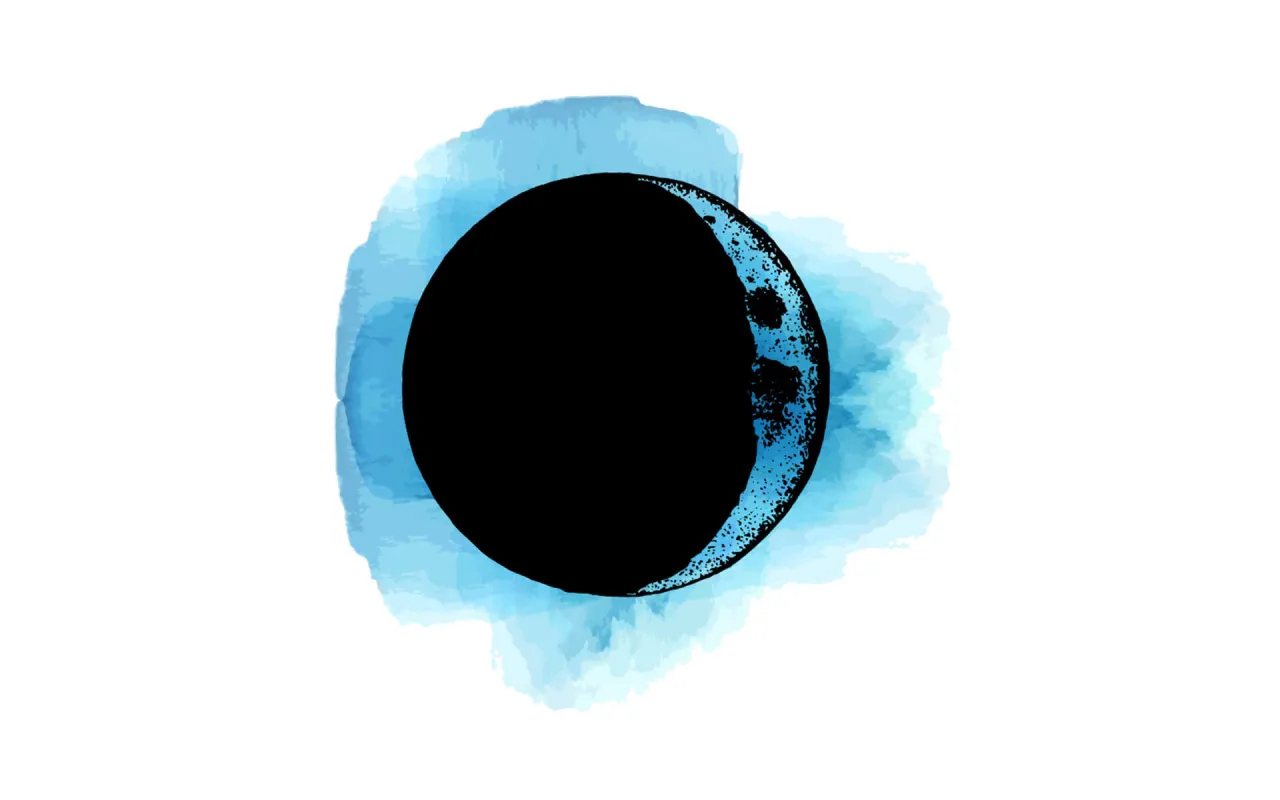
Every month the Moon completes the same cycle: it wanes, disappears, reappears, grows and reaches its brightest at the full moon. The new moon and the full moon are the two extremes of this cycle. In astrology, the new moon is seen as an opportunity to set intentions and make new beginnings, while the full moon is a chance to see what has come to fruition and let it go. Below you will find what these two phases mean, how to carry out simple rituals and how they relate to eclipses. You can find current dates on the moon calendar page.
How does the lunar cycle work?
The phases of the Moon depend on its position relative to the Sun. As the Moon orbits the Earth, it reflects the Sun's light from different angles. At the new moon, the Moon and the Sun are in the same sign, that is, in conjunction. The side of the Moon facing us is dark and cannot be seen in the sky. At the full moon, the Moon and the Sun face each other; they are in opposition, and the side of the Moon facing us is fully lit. One cycle lasts about 29.5 days.
Between these two extremes there are four main phases: new moon, first quarter, full moon and last quarter. Astrologers see these phases as a kind of monthly rhythm: beginning, taking action, reaching a peak and letting go.
New moon: a time for intention
The new moon is a blank page. Nothing is there yet, only possibilities. That is why astrology treats it as a good starting point for new projects, new habits and new goals. The sign the new moon falls in sets the theme for that month. In water signs, emotional connections come to the fore; in air signs, ideas and communication; in earth signs, order and concrete steps; in fire signs, courage and taking action.
Here is a simple way to set intentions at the new moon:
- Find a quiet place and pause for a few minutes. Think about what worked last month and what did not.
- Choose one to three intentions for the coming month. More than that leads to scattered energy.
- Write your intentions in the present tense and in positive terms. For example, "I stay calm and focused" instead of "I want to worry less."
- Next to each intention, write a small, measurable action. An intention without action remains just a wish.
- Keep the paper somewhere you can see it and review it from time to time throughout the month.
Full moon: seeing and letting go
The full moon is the moment when what was planted at the new moon comes to fruition. Emotions intensify and unresolved issues rise to the surface. Many people say they experience sleeplessness or restlessness around the full moon. Whether this is caused by the Moon itself or by the bright light of the full moon night is unclear; even so, it makes sense to use the full moon as a time for reflection.
These questions are useful for a full moon ritual: What was completed this month? What am I carrying more of than I need to? Which habit, thought or way of relating no longer serves me? Write these down on a piece of paper. You can tear the paper up and throw it away, or simply read it and set it aside. What matters is naming the thing you want to let go of first.
The sign of the full moon also matters, because every full moon takes place across an axis of two opposite signs. On the Aries-Libra axis, for example, the balance between yourself and others comes to the fore. By looking at which houses this axis falls in within your chart, you can see which area of life the Moon is shedding light on for you; a transit chart will help with this.
First quarter and last quarter
The first quarter, between the new moon and the full moon, is the phase that tests your intention. Obstacles, resistance and moments of decision become clear during this time. The last quarter, after the full moon, is a time for wrapping up and letting go. These two phases can serve as useful checkpoints during the month for tracking the progress of your intentions and your process of release.
Bringing the new moon and full moon into your own chart
The interpretation of a new moon or full moon is not the same for everyone. The same new moon may fall in one person's career house and in another person's relationship house. To find which house the Moon falls in for you, you need to know the houses in your birth chart; you can draw up your chart on the birth chart page and compare it with the houses guide. For example, if the new moon falls in your fifth house, it may be meaningful to set intentions around creative projects, fun and romantic beginnings. If it falls in your sixth house, health routines and work organisation come into focus.
The void-of-course Moon
Another term often heard alongside the lunar phases is the void-of-course Moon. When the Moon makes its last aspect to another planet before leaving its current sign, it is considered "void of course" until it enters the next sign. Some astrologers suggest focusing on routine tasks during this window rather than starting something new, and putting matters that await an outcome on hold for a while. There is no firm consensus on how decisions made during void-of-course hours will turn out; some astrologers see it merely as a matter of fine-tuning. For more detail on the term, see the astrology glossary.
Eclipses
Some new moons and full moons coincide with an eclipse. In a lunar eclipse, the Moon passes through the Earth's shadow; in a solar eclipse, the Moon comes between the Earth and the Sun. Both occur near the lunar nodes. In astrology, eclipse seasons are interpreted as carrying stronger and more lasting themes of change than ordinary new and full moons. A common piece of advice is to spend some time observing during these periods rather than rushing into major decisions. You can follow current eclipse information on the sky today page.
The value of rituals
The power of lunar rituals has not been scientifically proven. Reliable evidence that the Moon has a biological effect is limited. Even so, many people use these rituals as a framework for self-reflection. Pausing once a month to look at your life, writing down your goals and naming what needs to be let go is a valuable habit in itself. When you see astrology as a tool for interpretation and self-knowledge, the lunar cycle gives you a regular "checkpoint."
A suggested monthly rhythm
- New moon: Write down your intentions and make a small action plan.
- First quarter: Notice the obstacles and adjust the plan if needed.
- Full moon: See what has come to fruition and write down what you want to let go of.
- Last quarter: Rest, wrap things up and prepare for the next new moon.
Trying this rhythm for one month is enough. If it does not work for you, you can drop it; if it does, you can adapt it to your own style. The moon calendar will help you follow the Moon's daily movement. If you would like a closer look at the Moon's role in your emotions, you can also find your Moon sign on the Moon sign calculator page.
Frequently asked questions
How do you do a new moon ritual?
In a quiet setting, reflect on the past month, choose one to three intentions and write them in positive, present-tense sentences, adding a small action step next to each one. Keep the paper somewhere visible and review it throughout the month.
What do you do at the full moon?
The full moon is interpreted as a time to see what has come to fruition and let it go. Writing down and naming what you have completed and what you are carrying more of than you need brings awareness of the habits or thoughts you want to release.
Is an eclipse different from a new moon or full moon?
Eclipses are special new moons and full moons that occur near the lunar nodes. In astrology they are associated with stronger and more lasting themes of change; during these periods, observing is recommended rather than making hasty decisions.
- new moon
- full moon
- moon phases
- intention
- eclipse

Comments
No comments yet. Be the first to share your thoughts.